
There it sits, that stately brick tower poking out from your roof, braving the elements year-round. While your chimney might not demand attention like your lawn or gutters, it does require maintenance to keep it from becoming a Midwest homeowner’s nightmare. Let’s get into why that hardworking chimney of yours deserves a little more TLC—especially when it comes to something called tuckpointing. Spoiler alert: it’s the secret sauce to avoiding chimney drama!
Cracks, Bricks, and the Mighty Freeze-Thaw
If you live anywhere in the Midwest, you know that weather here isn’t for the faint of heart. Your chimney endures heat, cold, rain, and the legendary freeze-thaw cycle that can make concrete and brick crumble like an overbaked cookie. When temperatures drop, any water absorbed by the bricks or mortar expands and contracts, causing cracks over time. And these aren’t just any cracks—they’re little welcome mats for more water to sneak in and do even more damage.
Enter: tuckpointing, your chimney’s best friend.
What is Tuckpointing? (And Can’t I Just Caulk It?)
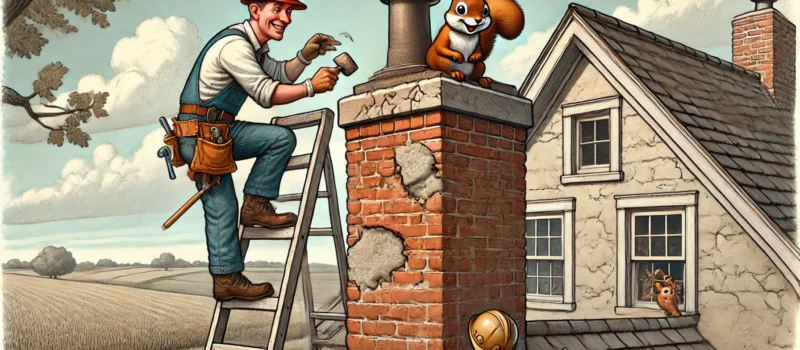
Think of tuckpointing as your chimney’s makeover. It’s not about slathering on some cement and calling it a day. Tuckpointing is a skilled process of removing old, deteriorating mortar and replacing it with fresh mortar that’s color-matched to blend with your existing bricks. This not only restores the appearance of your chimney, but also reinforces its structural integrity. Without it, cracks and gaps in the mortar can lead to loose bricks or even cause your chimney to lean—or worse, crumble completely.
Now, while you might be tempted to take on tuckpointing as a DIY weekend warrior, consider this: climbing onto a roof to replace mortar isn’t like planting tomatoes in your backyard. It’s risky, messy, and it takes some serious expertise to get it right. Call a local tuckpointing specialist.
Chimney Caps & Crowns: Little Extras That Make a Big Difference
If your chimney were a house, the chimney cap and crown would be its roof. The crown is the sloped, concrete surface that keeps rain from soaking into the top of the chimney, while the cap is like an umbrella, preventing rain, snow, and animals from sneaking inside. (Pro tip: squirrels love chimneys. Don’t ask how I know.)
Over time, these parts wear down, especially after years of heavy Midwest storms. Cracks in the crown or a rusty chimney cap can cause water to seep inside. And water in a chimney is about as welcome as an uninvited raccoon in your attic.
Schedule an Inspection—Your Chimney Will Thank You
If you’re thinking, “Do I really need to get my chimney inspected every year?” here’s some advice: just like you check your furnace every winter, get your chimney inspected too. Most pros recommend a yearly inspection to catch any issues early, before small cracks turn into big repairs. It’s way cheaper to maintain your chimney than to tear it down and rebuild it.
A Chimney That Works as Hard as You Do
In the Midwest, we value hard work and reliability, and your chimney is no exception. It keeps your home warm and cozy all winter and stands tall through rain, snow, and freezing temperatures. Give it the respect it deserves with regular maintenance, including a good tuckpointing job when it’s needed.
Because let’s face it, nothing says “Midwest homeowner” quite like keeping your chimney in tip-top shape. So, go on—give your chimney some love. It’s the quiet hero of your home, and it deserves a little more appreciation (and maybe a quick tuckpointing) this season!